Trump Sends Shock Signal Won’t Rule Out Dangerous War Against Venezuela
Trump Sends Shock as He Refuses to Rule Out War With Venezuela
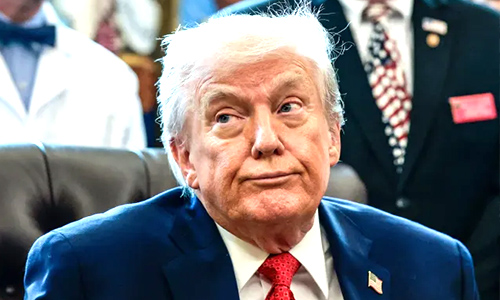
WASHINGTON — President Donald Trump has once again unsettled the international community by refusing to rule out the possibility of war with Venezuela. In a wide-ranging interview with NBC News, the US president left the door open to military action, even as his administration escalates pressure on Caracas through economic and naval measures. The remarks come amid an expanding US oil blockade and a growing American military presence in the Caribbean.
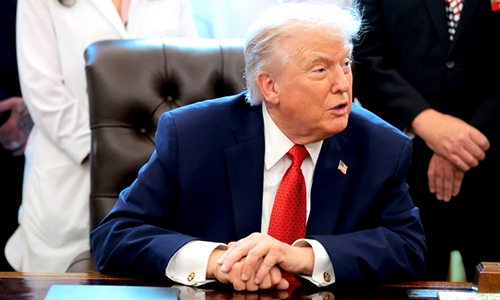
Trump Sends Shock through global diplomatic circles at a time when tensions between Washington and Caracas are already at a boiling point. His comments underscore the uncertainty surrounding US intentions toward Venezuela and raise fresh questions about whether economic pressure could eventually turn into open conflict.
“I Don’t Rule It Out,” Trump Says
In the phone interview published Friday, Trump was asked directly whether war with Venezuela was a possibility. His answer was brief but telling.
“I don’t rule it out, no,” he said.
That statement alone was enough to set off alarm bells across Latin America and beyond. Trump Sends Shock by keeping all options on the table, refusing to reassure allies or critics that military action is off limits.
At the same time, Trump declined to clearly state whether he wants to remove Venezuelan President Nicolas Maduro from power. Maduro, who leads an authoritarian leftist government, has long accused Washington of pursuing regime change in Caracas.
“He knows exactly what I want,” Trump said when asked about Maduro. “He knows better than anybody.”
Oil Blockade and Seizure of Tankers
The interview followed a significant escalation in US actions against Venezuela’s oil sector. Trump confirmed that American forces would continue seizing oil tankers linked to the South American nation. Last week, US authorities took control of a tanker leaving Venezuelan waters, signaling a tougher enforcement of sanctions.
Trump Sends Shock by shifting the focus of his pressure campaign toward oil, the backbone of Venezuela’s economy. The country holds the world’s largest proven oil reserves, making energy exports its most critical source of revenue.
Trump accused Venezuela of “taking” US oil, a reference to the nationalization of the oil industry years ago. Announcing the blockade, he argued that American energy interests had been unfairly stripped away.
“They took all of our energy rights, they took all of our oil,” Trump said. “And we want it back.”
Analysts cited by major outlets such as Reuters and Bloomberg note that targeting oil shipments could further cripple Venezuela’s already fragile economy.
Military Build-Up in the Caribbean
Beyond economic measures, the US has been steadily increasing its military footprint in the Caribbean. Warships, surveillance aircraft, and additional personnel have been deployed in recent months, officially as part of counter-narcotics operations.
Trump Sends Shock by refusing to clarify how far this military build-up could go. While the administration insists the mission is focused on drug trafficking, critics argue the line between enforcement and preparation for conflict is becoming increasingly blurred.
The president has accused Maduro of running a “narco-terrorist” cartel, a claim Venezuela strongly denies. Since September, US forces have carried out numerous strikes on alleged drug boats in the region, with reports indicating that more than 100 people have been killed during these operations.
Talk of Land Strikes
Trump has also repeatedly hinted at the possibility of land strikes against drug traffickers. For weeks, he has said such operations could begin “soon,” though no timeline has been provided.
Trump Sends Shock by combining aggressive rhetoric with vague timelines, keeping both supporters and critics guessing. Security experts warn that any land-based military action in or near Venezuela could rapidly escalate into a wider confrontation.
Regional governments, including those in Colombia and Brazil, are closely watching developments, wary of instability that could spill across borders.
Venezuela’s Response and International Reaction
The Venezuelan government has condemned US actions as acts of aggression and economic warfare. Maduro has accused Washington of attempting to strangle Venezuela’s economy and provoke unrest.
Trump Sends Shock not just in Caracas, but also among US allies who fear a repeat of past interventions in Latin America. Human rights organizations have also raised concerns about the humanitarian impact of tighter sanctions and blockades on ordinary Venezuelans.
International observers note that the lack of clarity in US objectives adds to the danger. Is the goal regime change, deterrence, or simply economic pressure? Trump has offered no definitive answer.
Domestic Issues: Military Spending and Troop Payments
During the same week, Trump also addressed domestic military spending. A senior administration official revealed that a one-time bonus for US troops would cost approximately $2.6 billion. The funds will be drawn from military housing allocations under the “One Big Beautiful Bill,” which Trump signed into law in July.
Trump Sends Shock less on foreign policy here, but the move reflects his effort to maintain support within the armed forces as overseas tensions rise. According to a Senate appropriations source, the Defense Department opted for a one-time payment rather than creating a long-term precedent for housing costs.
Health Care Remarks Add Another Layer
Trump also touched on health care during his remarks, sharply criticizing large insurance companies. He accused them of profiting from money that should go directly to the public.
Trump Sends Shock by suggesting that Americans should buy their own health insurance rather than rely on government-backed systems. He argued this would lead to better coverage at lower costs.
Meanwhile, millions of Americans using Affordable Care Act plans are expected to face higher premiums next year after House Republicans declined to extend subsidies. Despite this, Trump said he does not believe repealing Obamacare is necessary.
“Obamacare would just repeal itself,” he claimed, calling it too expensive for consumers.
Political Stakes Ahead of Midterms
All of this unfolds as both parties prepare for crucial midterm elections next November. Republicans are keenly aware that losing control of Congress could open the door to investigations and legislative roadblocks.
Trump Sends Shock less forcefully here, but remains confident. Asked whether Republicans would retain control of both chambers, he replied, “I think so. I certainly hope so.”
Political analysts argue that Trump’s tough stance on Venezuela may be designed to project strength to his base, even as it risks alienating moderate voters concerned about another foreign conflict.