
Climate Minister Warns of Dangerous Global Fragmentation at UNAOC 2025
Climate Minister Warns of a Fragmenting World Order at UNAOC Forum
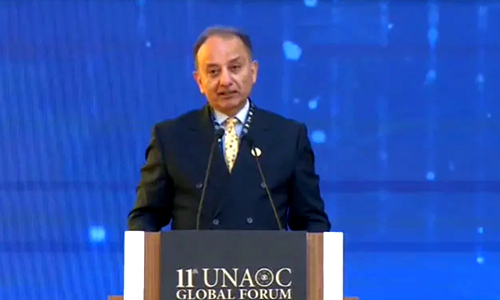
Addressing world leaders at the 11th UNAOC Global Forum in Riyadh, Pakistan’s Federal Minister for Climate Change, Musadik Malik, delivered a sobering message about the state of the world today. As conflicts intensify and global cooperation weakens, the Climate Minister Warns that the international system is drifting away from dialogue and toward division.
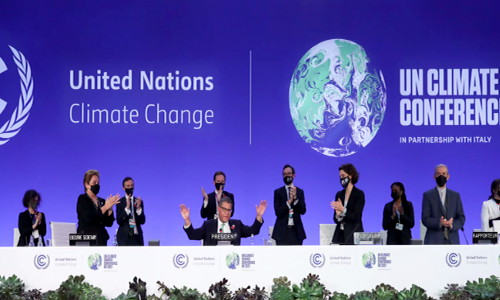
The forum, held under the theme “UNAOC: Two Decades of Dialogue for Humanity,” marked the 20th anniversary of the United Nations Alliance of Civilisations. It brought together policymakers, diplomats, and civil society leaders from across the globe to reflect on the future of multilateral cooperation.
A Global Vision Under Strain
Speaking to an international audience, Malik reflected on how the idea of a connected global village is slowly unraveling. Once, nations believed shared challenges could be addressed collectively. Today, that vision appears increasingly distant.
According to Malik, the weakening of multilateralism is not a sudden event but a gradual erosion. The Climate Minister Warns that this decline has created space for unilateral actions, undermining global peace, justice, and cooperation.
Institutions once designed to foster consensus now struggle to respond effectively to crises, from armed conflicts to climate emergencies.
Decline of Multilateralism and Rise of Conflict
Malik pointed to the growing number of war-torn regions as evidence of a fractured global order. Armed conflicts, prolonged humanitarian crises, and unresolved disputes continue to destabilise entire regions.
At the same time, global funding for environmental protection and sustainable development is shrinking. Trade wars, tariff disputes, and economic nationalism have replaced collaboration with competition. The Climate Minister Warns that such trends threaten not only peace but also the planet’s future.
These issues, he stressed, cannot be solved by individual nations acting alone.
Justice and Rights Must Be Universal
A central theme of Malik’s address was the universal application of justice and human rights. He made it clear that rights cannot be selective or conditional.
“I am firmly committed to women’s rights, minority rights, environmental rights, and children’s rights,” he said, describing them as fundamental and non-negotiable.
The Climate Minister Warns that when global powers apply these principles selectively, credibility is lost and injustice deepens.
Palestine and Kashmir in Focus
In this context, Malik drew attention to the situations in Palestine and Indian Illegally Occupied Jammu and Kashmir. He questioned why international norms are enforced rigorously in some cases but ignored in others.
He argued that the rights of Palestinians and Kashmiris must be recognised under international law, just as rights are defended elsewhere. The Climate Minister Warns that silence or selective concern erodes trust in the global system and fuels resentment.
These unresolved issues, he noted, are not only regional concerns but tests of global moral consistency.
Water Rights and Regional Stability
Beyond conflict zones, Malik highlighted another often-overlooked issue: water security. He emphasised the responsibility of upper riparian states toward lower riparian countries, calling equitable water sharing essential for regional stability.
Water scarcity, exacerbated by climate change, is emerging as a major source of tension. The Climate Minister Warns that without cooperation and fair agreements, water disputes could become future flashpoints for conflict.
This issue, he said, sits at the intersection of climate policy, human rights, and regional peace.
Climate Change and Global Responsibility
As climate minister, Malik also linked geopolitical fragmentation to environmental neglect. Climate change, he argued, is a shared threat that demands collective action.
Yet global climate financing is declining at a time when vulnerable countries need it most. The Climate Minister Warns that abandoning climate commitments will disproportionately harm developing nations, widening inequality and instability.
He urged wealthier countries to honour their pledges and support climate adaptation, renewable energy, and disaster resilience.
Bilateralism Replacing Cooperation
Another concern raised was the shift from multilateral engagement to narrow bilateral or unilateral approaches. Malik cautioned that this trend weakens global institutions designed to manage shared challenges.
The Climate Minister Warns that when nations prioritise short-term national interests over collective solutions, long-term global security suffers.
Strong institutions like the United Nations, UNAOC, and international climate frameworks depend on trust and participation from all members.
A Call to Recommit to Dialogue
Marking the 20th anniversary of the United Nations Alliance of Civilisations, Malik described the moment as an opportunity for reflection and renewal.
Dialogue, he said, remains humanity’s most powerful tool against division. The Climate Minister Warns that abandoning dialogue in favour of confrontation will only deepen global fractures.
He called on leaders to recommit to peace, harmony, and mutual respect, values that inspired the creation of UNAOC two decades ago.
Why This Message Matters Now
The timing of Malik’s speech is significant. With conflicts expanding, climate impacts intensifying, and global trust eroding, the need for cooperation has never been greater.
The Climate Minister Warns that the world stands at a crossroads. One path leads toward deeper fragmentation and instability. The other requires difficult conversations, shared responsibility, and renewed faith in multilateralism.
Looking Ahead
Malik’s address was not merely a critique of the current global order. It was a call to action. He urged nations to move beyond rhetoric and demonstrate commitment through policy, funding, and fair application of international law.
As the world reflects on two decades of the United Nations Alliance of Civilisations, the message from Riyadh was clear. Without justice, dialogue, and cooperation, the promise of a peaceful global community will remain unfulfilled.
And as the Climate Minister Warns, the cost of inaction will be paid not only by today’s generation, but by those yet to come.