
Michael Burry flags $500B AI earnings illusion—says correction inevitable
Michael Burry Flags AI Accounting Tricks: Is Big Tech Boosting Earnings Artificially?
Meta Title: Michael Burry Flags Artificial AI Earnings – Truth Behind Big Tech Accounting
Meta Description: Michael Burry flags accounting red flags in AI hyperscalers like Meta, Oracle, and Nvidia. Is Big Tech overstating profits through depreciation games?
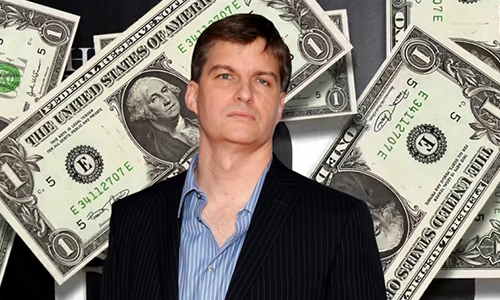
Who Is Michael Burry?
Before diving into the latest controversy, let’s remind ourselves who Michael Burry really is.
Michael Burry is the legendary investor made famous by The Big Short — the man who predicted the 2008 financial crisis and made millions betting against subprime mortgages. His deep understanding of financial systems and his willingness to challenge Wall Street narratives made him one of the most respected (and feared) voices in modern investing.
And now, Michael Burry flags another potential bubble — this time in Artificial Intelligence (AI) and Big Tech accounting.
Michael Burry Flags AI Hyperscalers’ “Fake” Earnings
According to a detailed post by Burry on X (formerly Twitter), some of the biggest AI and cloud companies — including Meta, Oracle, and others — are allegedly using aggressive accounting methods to make their profits look better than they are.
Michael Burry flags the issue of understated depreciation, which means these companies are stretching out the estimated life of their expensive assets, such as Nvidia chips and AI servers, far beyond reality.
As Burry put it,
“Understating depreciation by extending useful life of assets artificially boosts earnings – one of the more common frauds of the modern era.”
In simpler terms, if a company buys equipment that should last 3 years but reports it as lasting 6, it can spread the cost over more years — making its yearly expenses smaller and profits appear bigger.
Why Michael Burry Flags This as a Major Red Flag
Michael Burry flags this accounting trick as a modern-day earnings illusion. He estimates that between 2026 and 2028, this depreciation loophole could understate costs by nearly $176 billion, giving the illusion of inflated profits across the AI industry.
In his analysis, Oracle’s profits could be overstated by 27%, and Meta’s by 21% by 2028. These are not small numbers — they point to what he believes could be the next tech accounting crisis.
Big Tech Responds (or Doesn’t)
As of now, CNBC reports that both Oracle and Meta have declined to comment on Burry’s claims. Nvidia, one of the main suppliers of these high-end AI chips, also refused to respond.
This silence is adding fuel to the fire. Investors are now questioning whether Burry’s warnings — just like his 2008 housing crash prediction — could once again be right.
Michael Burry Flags $187 Million Against Nvidia and Palantir
Michael Burry’s skepticism isn’t just talk. He has backed his words with real bets.
In a recent SEC filing, Burry’s Scion Asset Management revealed put options worth nearly $187 million against Nvidia and $912 million against Palantir Technologies as of September 30.
This means Michael Burry flags his belief through actual trades — he’s literally betting that these companies’ stock prices will fall.
Palantir’s CEO, Alex Karp, reacted strongly, calling Burry’s moves “super weird” and “bat— crazy.” But the numbers tell a different story: Palantir’s stock fell 11% last week before rebounding 9% on Monday. Nvidia, too, dropped 7% last week and rose back 6% the next day.
Michael Burry Flags Parallels With the 1990s Tech Bubble
Burry has repeatedly compared the current AI enthusiasm to the dot-com bubble of the late 1990s. Back then, companies exaggerated growth potential through vague metrics and unrealistic valuations.
Now, Michael Burry flags a similar trend — companies boosting AI-related profits on paper while ignoring the actual depreciation and replacement cost of the hardware driving their AI revolution.
In his words, it’s not that AI isn’t revolutionary. The problem, he says, lies in how companies are reporting their growth to please shareholders and keep stock prices high.
Could Burry Be Right Again?
Investors who ignored Burry in 2007 learned the hard way. Now, with Michael Burry flags trending again across social media, analysts are split. Some say he’s overreacting; others believe his warnings deserve serious attention.
If depreciation estimates are indeed unrealistic, then many Big Tech companies could face a sharp correction in earnings from 2026 onwards — exactly the window Burry is highlighting.
Michael Burry Flags Transparency as the Need of the Hour
The key takeaway from Burry’s argument isn’t to fear AI but to demand clarity.
When massive corporations like Amazon, Google, or Meta hold billions in AI hardware, investors deserve to know whether their accounting is transparent or just a temporary illusion of strength.
Michael Burry flags this not as an anti-AI rant, but as a warning to maintain financial honesty in an industry already overflowing with hype.
Final Thoughts
The last time Michael Burry raised alarms, few listened — and Wall Street collapsed under the weight of hidden risks.
Now, as Michael Burry flags potential fraud-like accounting in AI hyperscalers, the question is whether history will repeat itself.
Investors, regulators, and financial analysts would be wise to pay attention. AI may be the future, but as Burry reminds us, no future is built on fake numbers.