
5G Tech 7 Powerful Pros & 6 Risky Con
5G Tech: Unlocking the Future with Speed and Challenges
The world of communication is evolving at lightning speed, and 5G Tech is at the center of this revolution. From smartphones to smart cities, from healthcare to gaming, 5G technology is transforming the way we live, work, and connect. It is not just an upgrade from 4G but a complete shift toward a hyper-connected future.
In this blog, we will explore what 5G Tech is, its key advantages, disadvantages, and future impact, so you can understand both the positive and negative sides of this powerful technology.
What is 5G Tech?
5 G Tech stands for the fifth generation of wireless mobile technology. Compared to its predecessor 4G, it offers:
-
Internet speeds up to 10 Gbps
-
Ultra-low latency (as low as 1 ms)
-
The ability to connect millions of devices simultaneously
This means 5G is not just about faster internet—it’s about enabling smart devices, autonomous cars, artificial intelligence, and the Internet of Things (IoT) to work seamlessly.
7 Key Advantages of 5G Tech
1. Super-Fast Internet Speeds
With 5G Tech, downloading movies, games, or large files takes only seconds. This 10–20 times faster speed than 4G is a game-changer for businesses and individuals.
2. Ultra-Low Latency
Latency is the delay in communication. 5G Tech reduces latency to 1 millisecond, which is essential for real-time applications like remote surgeries, robotics, and online gaming.
3. Massive Device Connectivity
Unlike 4G, 5G Tech can connect up to 1 million devices per square kilometer. This makes it perfect for IoT ecosystems, smart cities, and industrial automation.
4. Revolution in Healthcare
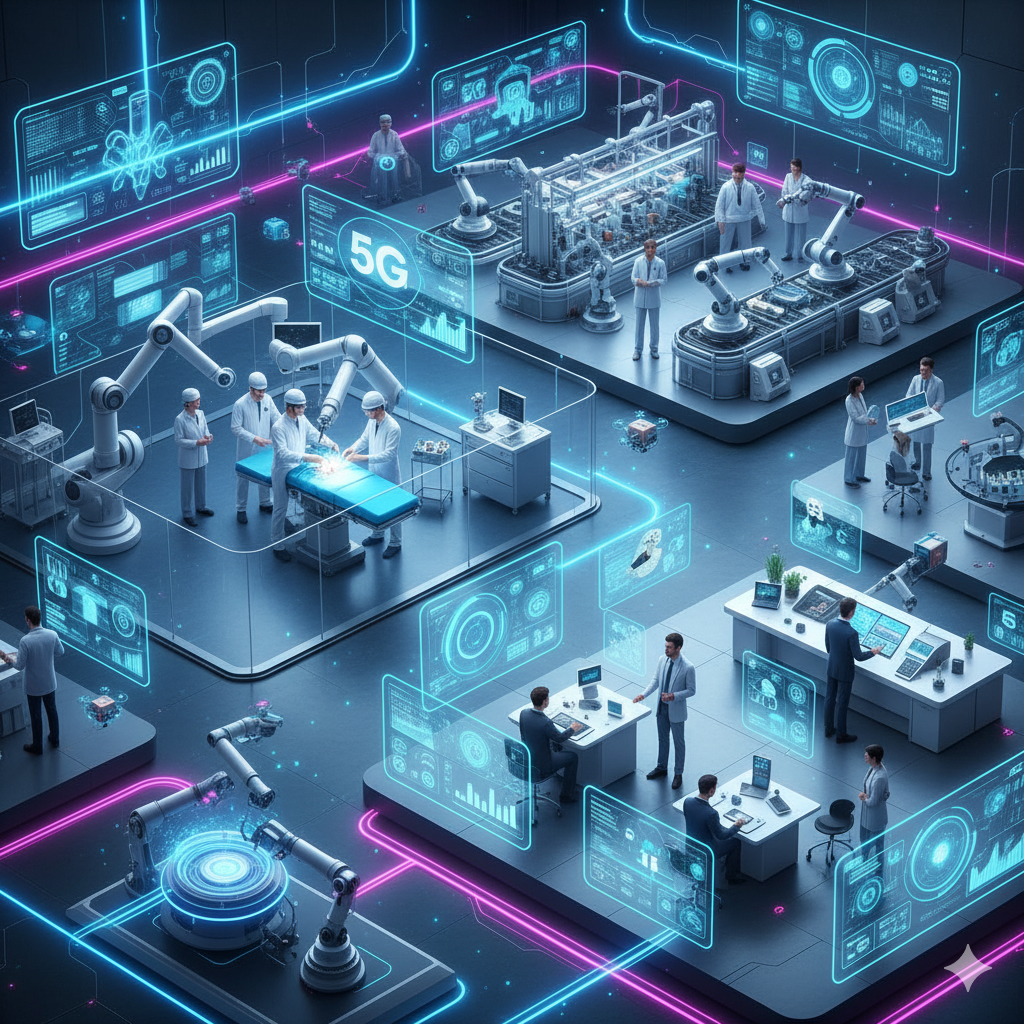
Doctors can perform remote surgeries using robotic systems with 5G’s real-time communication. Medical scans and reports can be shared instantly across the world.
5. Boost for Autonomous Vehicles
Self-driving cars rely on ultra-fast decision-making. 5G Tech allows vehicles to communicate with traffic systems and other vehicles, reducing accidents.
6. Enhanced Entertainment
5G enables lag-free VR/AR gaming and 8K streaming without buffering, opening doors for new experiences in entertainment.
7. Economic and Industrial Growth
Factories can operate with automation, AI integration, and real-time monitoring, improving efficiency and cutting costs. Businesses gain more control and productivity.
6 Major Disadvantages of 5G Tech
1. High Infrastructure Costs
5G requires new towers, base stations, and fiber optics, making it expensive for countries and telecom operators to implement.
2. Limited Coverage
Currently, 5G Tech is mostly available in big cities. Rural and remote areas may not benefit from it for several years.
3. High Power Consumption
Maintaining 5G networks demands more energy, raising concerns about environmental sustainability.
4. Device Compatibility
Older smartphones and devices are not compatible with 5G. Consumers must purchase 5G-enabled devices, which are often costly.
5. Health Concerns
Some experts worry about potential health effects from 5G radiation exposure. While not proven scientifically, the debate continues.
6. Privacy and Cybersecurity Risks
More connected devices mean higher chances of hacking, cyberattacks, and data breaches, making cybersecurity a serious issue.
Pros and Cons of 5G (Comparison Table)
| Aspect | Pros (Advantages) | Cons (Disadvantages) |
|---|---|---|
| Internet Speed | Up to 10 Gbps | Expensive infrastructure setup |
| Latency | As low as 1 ms | Limited availability in rural areas |
| Connectivity | 1M devices per sq. km | High energy consumption |
| Healthcare | Enables remote surgeries and telemedicine | Raises possible health concerns |
| Entertainment | 8K streaming & AR/VR gaming without lag | Requires costly 5G devices |
| Industry | Improves automation and efficiency | Cybersecurity and privacy risks |
The Future of 5 G Tech
The future of 5G Tech looks bright, but challenges remain. Countries investing in infrastructure will see faster economic growth, smarter cities, and better digital services. Meanwhile, those slow to adopt may fall behind in the global tech race.
Experts believe that 6G technology is already in research stages, but 5G will dominate for at least the next decade, powering AI, IoT, blockchain, and automation systems worldwide.
Conclusion
5G Tech is more than just fast internet. It’s a transformative technology that will redefine industries, healthcare, education, transportation, and everyday life.
Its 7 key advantages—speed, low latency, massive connectivity, healthcare benefits, support for autonomous vehicles, entertainment upgrades, and economic growth—make it revolutionary. But we cannot ignore its 6 disadvantages, such as high cost, limited coverage, power consumption, compatibility issues, health concerns, and cybersecurity risks.
In short, 5G Tech is both an opportunity and a challenge. Those who adopt it early will lead the digital future, while those who delay may struggle to keep up